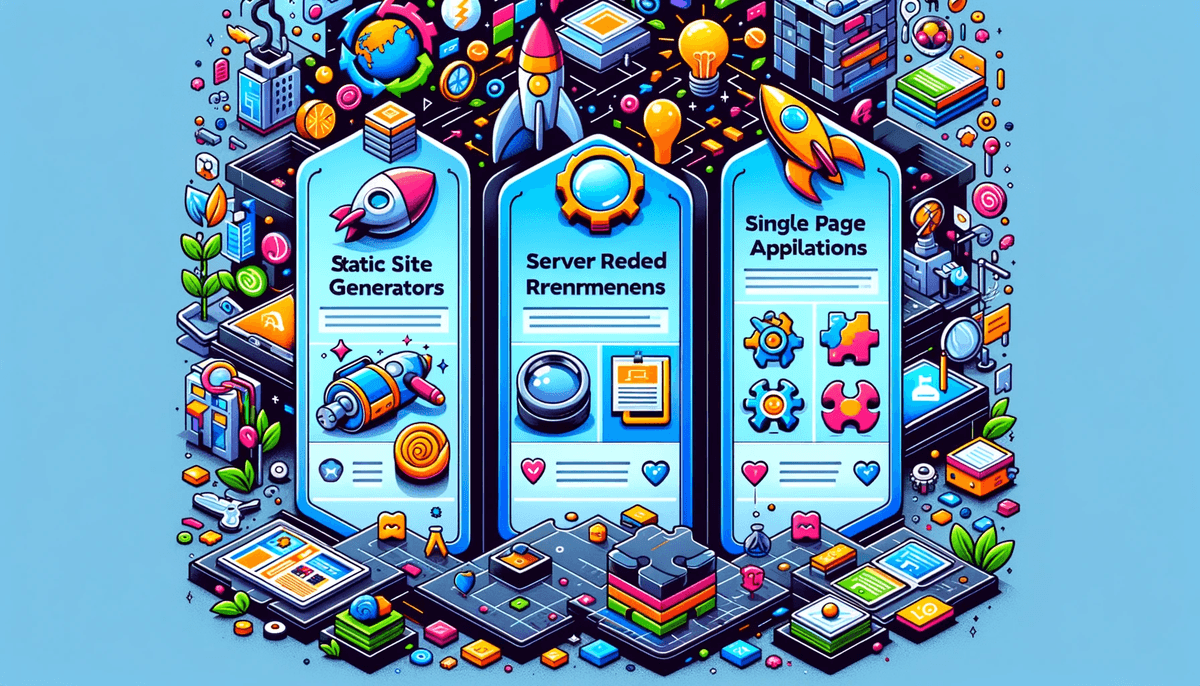
Explore the strengths and weaknesses of Static Site Generators, Server Rendered Pages, and Single Page Applications to optimize your web project.
Static Rendered Pages (Static Site Generators)
Pros
- Performance: Static pages are pre-rendered and served directly, which can lead to faster load times.
- Security: Since there’s no server processing involved (like querying databases), the risk of server-side vulnerabilities is reduced.
- Scalability: Static assets can easily be distributed across Content Delivery Networks (CDNs) to handle large traffic volumes.
- Low Cost: Hosting static assets tends to be cheaper and easier.
- Development Simplicity: Fewer moving parts compared to full server-side setups.
Cons
- Limited Dynamic Features: Real-time data or user-specific content might require additional client-side JavaScript or third-party services.
- Rebuild Times: Changes require the site to be rebuilt, which can be time-consuming for very large sites.
- Less Interactivity: Out of the box, they’re less suited for applications needing heavy interactivity and real-time features.
Server Rendered Pages
Pros
- Dynamic Content: Server-side rendering (SSR) can deliver real-time, user-specific content.
- SEO: Initial content is rendered server-side, which can benefit search engine optimization.
- No Additional Downloads: Unlike SPAs, no extra JavaScript frameworks/libraries are required to be loaded initially.
- Better Initial Load: Initial content can be displayed more quickly without waiting for all resources to download and execute.
Cons
- Server Load: Rendering content server-side puts more strain on the server, especially with many users.
- Scalability: This may require more sophisticated server setups or serverless functions to scale effectively.
- Latency: Every new page or content change requires a round trip to the server, which can introduce latency.
Single Page Applications (SPA)
Pros
- Smooth User Experience: Transitions between pages and states can be seamless, offering a native app-like feel.
- Rich Interactivity: SPAs are ideal for applications with many interactivity and dynamic content.
- Reduced Server Load: Once the SPA is loaded, much of the processing is client-side, reducing server requests.
- Flexible Architecture: SPAs can easily integrate with various back-ends or third-party services via APIs.
Cons
- SEO Challenges: Search engines have improved, but indexing dynamically rendered content can pose challenges. = Initial Load Time: SPAs may have slower initial load times as they download the necessary resources for the entire application.
- Complexity: Building, maintaining, and debugging SPAs can be more complex due to client-side rendering, state management, and other concerns.
- Requires JavaScript: SPAs rely heavily on JavaScript. If a user has JavaScript disabled, the application won’t function.
Each approach has its use cases and might be more or less suitable depending on the specific requirements of a project. For instance, blogs and documentation sites might benefit from static rendering, e-commerce or news sites with constantly updating content might lean towards server rendering, and web apps with lots of interactivity might find SPAs most beneficial.